


Guide to the Right Temperature for Wearing a Down Vest
The most common question consumers have is in what temperature is it ideal to wear a down vest? What is the temperature? There is no right or wrong answer; it will come down to three factors: the down quality, your comfort, and how you wear it.

Core Factor 1: Down Quality Informs Insulation Performance
High-quality down vests (80–90g fill, 600+ fill power) perform effectively within 5°C and 15°C. Around 5°C, wearing the vest with a long-sleeved sweater is warm enough, while at that 12–15°C level, it can be worn over either a T-shirt or lightweight top for cooler weather.
Lightweight vests (50–60g fill) shine in seasons of transition like spring and autumn; these temperatures are generally within 10–20°C and offer useful flexibility for warmth (especially useful during days with extreme changes in temperature throughout the day from morning to evening).
Core Factor 2: Individual Sensitivity to Temperature
Comfort can differ greatly from individual to individual. A consumer from the Nordic region may feel comfortable in a down vest alone at a temperature of 10, while another consumer from Southeast Asia may want to wear a long-sleeved base layer under the vest at a temperature of 18. Experience of comfort will vary according to, for example, metabolism, activity, and cold tolerance. A good guide for comfort will be framed from the temperature that your body typically begins to feel comfortable during the spring and autumn months in your local climate.
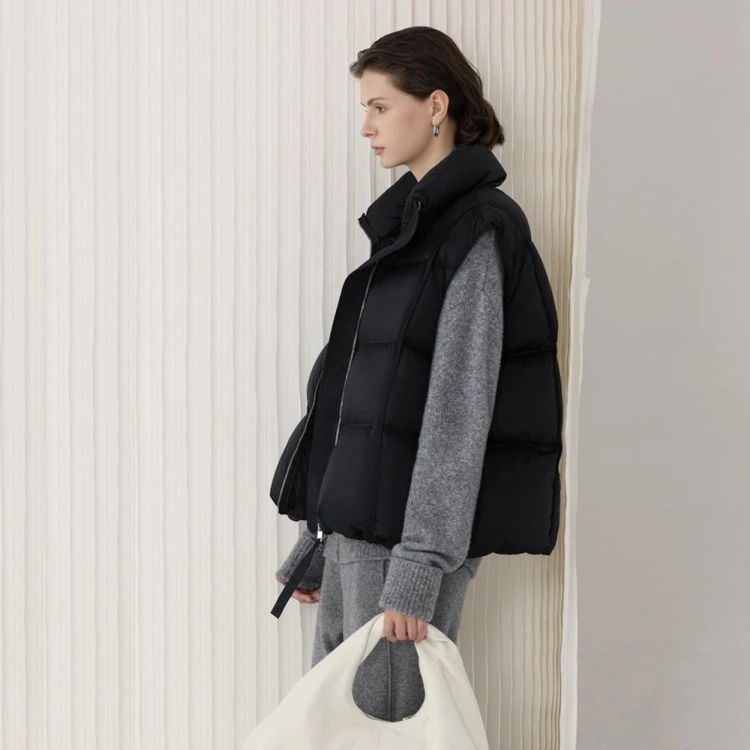

Core Factor 3: The Art of Layering Expands Temperature Limits
With the right layering, down vests can be worn in temperatures as low as 0°C:
5°C to 0°C: Pair with a fleece jacket and windbreaker
8°C to 3°C: Pair with a turtleneck sweater and denim jacket
12°C to 5°C: Pair with a shirt and scarf
In general, most down vests become too warm above 20°C, but lightweight models can still serve as practical warming layers indoors, particularly in air-conditioned spaces.
Regional Outfit Recommendations
North America: Ideal for forest hikes or city commuting in 5–18°C
Europe: Works well between 8–16°C, often paired with a windproof outer layer for rainy conditions
Japan & South Korea: Can be layered over a suit jacket for a smart casual look in 10–20°C
Southeast Asia: Best suited for air-conditioned indoor environments in 18–22°C
Practical Buying Tips
Check the down fill weight on the tag (80–100g is considered medium thickness)
Perform a rebound test by pressing the vest-faster rebound indicates higher fill power
Look for zoned quilting, which helps distribute down more evenly and reduces cold spots
The performance of a piece of clothing ultimately relies on your activity level. Even a vest worn outdoors feels warm enough, it may feel 3–5°C cooler indoors (read: at rest). The best bet is to be comfortable when you feel a bit cool, do not risk overheating while doing some light activity, and simply adjust your temperature with layers.